Two sides, one system.
Spona connects businesses with the digital agencies that build their products, and handles everything in between.

- What I built
- Global B2B platform for hiring agencies and managing digital projects. Worked on the product structure that scaled it to a network of 10K+ agencies.
- INTRODUCTION
- Spona is a global B2B platform connecting businesses with vetted digital agencies for marketing, web development, and branding. I joined as product designer, shaping a structure that holds up as the network scales from hundreds to thousands.
Designing a marketplace that has to work for two sides at once means every decision serves two audiences. What feels intuitive for one side often complicates things for the other.
10,000+
agencies
50+
design components
4 layers
Atomic design
- Context
- Spona is a two-sided marketplace where businesses hire agencies for digital projects. The platform handles discovery, contracts, milestone tracking, payments, and delivery. I worked across both sides, defining how each user type moved through the system and where their workflows intersected.
- Work scope
- User flows, information architecture, and interface structure across the platform's core modules: project briefs, agency profiles, proposals, contracts, milestone management, payments, and reporting. Each module had to stand on its own but connect cleanly to the others, since most users moved between them daily.
- Scale challenge
- The platform grew quickly, from a small set of agencies to a network of more than 10,000. That kind of growth surfaces structural questions early. How do you organize agency profiles when there are thousands? How does search work when supply scales faster than demand? How do you keep workflows predictable across wildly different project types?
- Design decisions
- The work was about creating a structure flexible enough to handle different project sizes and shapes, but consistent enough that users always knew where they were. Project briefs were templated but customizable. Contracts and milestones followed a shared pattern. Communication threads were tied to specific deliverables, not free-form chats.
- Cross-border complexity
- Spona operated across borders, contract types, compliance requirements, and communication norms. Design choices that work for a local platform start to break down at international scale, and we kept finding new edges.
- Reflection
- Spona taught me what it takes to design for two audiences at once. The platform keeps growing into new edges of the marketplace, and what stays valuable through that growth is the underlying structure: how information is organized, and the patterns users learn to rely on.
Other Work
See All
Broadcast graphics for national television
Designed daily broadcast graphics for HRT1 news programming, where pace mattered as much as visual clarity.
Graphic Design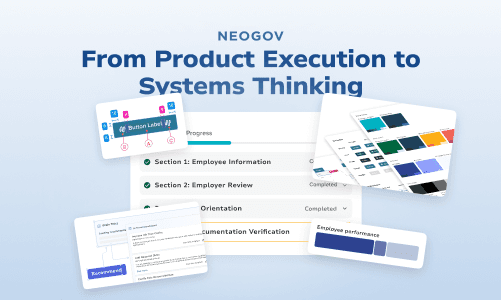
Enterprise design system for HR SaaS
Worked on NOVI, the design system powering NEOGOV's product platform serving 13,000+ US public sector agencies.
Design System